I Want to Buy a Condo in Kailua-Kona. What Should I Know First?
A local look at HOA fees, rental rules, insurance, leasehold issues, and the condo differences buyers should understand before buying in Kailua-Kona.
If you are thinking about buying a condo in Kailua-Kona, the first question is simple: how are you going to use it?
Primary residence, second home, or short-term vacation rental?
That answer affects financing, rental rules, maintenance costs, insurance, taxes, and which condo complexes may or may not make sense for you.
I have worked with buyers on Hawaii Island for more than 20 years, and Kona condos are not all the same. Two units can look similar online, but once you look at financing, HOA fees, insurance, rental rules, and how the complex is operated, they can be very different purchases.
Start With How You Plan to Use the Condo
Kailua-Kona gives buyers a lot of options, but not every condo works for every purpose.
A condo that works great as a second home may not work as a vacation rental. A condo that works for a cash buyer may be more complicated for a buyer who needs financing.
That is why I do not start with, “What is the cheapest condo near the ocean?” I start with, “What are you trying to accomplish?”
Cash or Financing Makes a Big Difference
The next question is whether you are paying cash or financing the purchase.
Some Kailua-Kona condos are fairly straightforward to finance. Others may fall into what we commonly refer to in Hawaii as “condo hotel” territory. That is where things can get more complicated.
A simple rule of thumb is this: does the complex have a check-in desk? If it does, that can be a sign that lenders may look at the project differently. But like most things in real estate, it is not always that simple. There are other factors that can affect whether a lender treats a property as a condo hotel, including occupancy, rental use, management structure, and other project details.
That does not mean the condo is bad. It just means the buyer needs to understand the financing before falling in love with the unit.
For example, Kanaloa at Kona is a well-known complex in the Keauhou area that is run with a management structure and has a check-in desk. That can change the financing conversation. Again, that is not a warning against the complex. It just means you need to know what you are buying and how your lender will view it.
Casa de Emdeko is another example where the conversation may be different. There, the issue may be less about a check-in desk and more about the mix of owner occupancy versus rental use. These are the kinds of details that do not always jump out at buyers when they are scrolling through listings online.
Short-Term Rentals Are Not Automatic
If your plan is to rent the condo out short term, do not assume you can just buy any condo and start renting it nightly.
Some condos are already approved or legally operating as short-term vacation rentals. Others may not be. Some may have county rules, zoning issues, association rules, or registration requirements that affect what you can and cannot do.
This is one of the biggest mistakes buyers make. They see a condo online, run some rental numbers in their head, and assume the income will work. Before you make that assumption, confirm whether short-term rental use is allowed, whether the unit is already properly registered if required, and whether the association has any rental restrictions.
A condo that works as a second home may not work as a vacation rental. A condo that worked for one owner may not automatically work the same way for the next buyer.
Vacation Rental Income: Offset, Not Jackpot
One thing I explain early is that owning a vacation rental in Hawaii is not the same as buying an investment rental in many areas on the continent.
I often meet buyers who come in thinking they are going to make a lot of money owning a vacation rental in Kailua-Kona. In most cases, that is not the right way to look at it.
There is only one Hawaii, and owning here is special. But the cost of ownership is also different. Between purchase price, maintenance fees, insurance, property taxes, management fees, repairs, utilities, cleaning, furnishings, and downtime between guests, the more realistic goal is usually to offset some of your ownership cost, not create a cash machine.
That does not mean a vacation rental condo is a bad idea. It can be a great fit for the right buyer. But I would rather have that conversation upfront than have a buyer build their plans around numbers that may not hold up in the real world.
If your goal is to enjoy the condo, use it when you are here, and rent it when you are not, that can make sense. If your goal is pure cash flow, we need to look very carefully at the numbers before you move forward.
Maintenance Fees Are Not All the Same
One of the first things buyers notice with condos in Kailua-Kona is the maintenance fee. Sometimes they see the number and immediately think it is too high.
Maybe it is. Maybe it is not.
You have to look at what the fee actually includes.
Most condo maintenance fees cover the obvious things, such as grounds maintenance, pool maintenance, common area upkeep, trash, sewer, water, and the building’s master insurance policy. That insurance can be expensive, especially when the building is near the ocean.
Electricity is usually not included, although there are exceptions. Some complexes may include cable or other services. Some include more than buyers realize.
Casa de Emdeko is a good example. In that complex, the maintenance fee can include air conditioning and hot water through the building systems. That matters. Hawaii has some of the highest electricity costs in the country, and it is not unusual for a two-bedroom condo to have an electric bill in the $300 to $400 range. If part of your cooling cost and hot water cost is covered through the maintenance fee, that can change the real monthly cost of ownership.
That is why you cannot compare maintenance fees by the number alone. A lower fee is not always better, and a higher fee is not always worse. You need to know what is included, what is not included, and what costs you will still have separately.
Fee Simple vs. Leasehold
Most condos on Hawaii Island are fee simple, which means you own the unit and your share of the common elements. There are not nearly as many leasehold properties here as buyers may see on some other islands, but they do exist.
With a leasehold condo, the purchase price may look lower, but there is usually an additional lease rent payment on top of the regular maintenance fee and other ownership costs. The lease also has an expiration date, and in some cases there may be future lease rent renegotiation dates.
That can affect financing, resale value, monthly cost, and long-term ownership risk.
This topic deserves its own full article, but the simple advice is this: do not compare a fee simple condo and a leasehold condo by purchase price alone. Make sure you understand the full monthly cost, the lease terms, the expiration date, and what happens at renegotiation.
Kailua Side vs. Keauhou Side
When buyers ask me which Kailua-Kona condo complex is “best,” my answer is usually, “Best for what?”
There is no one-size-fits-all answer.
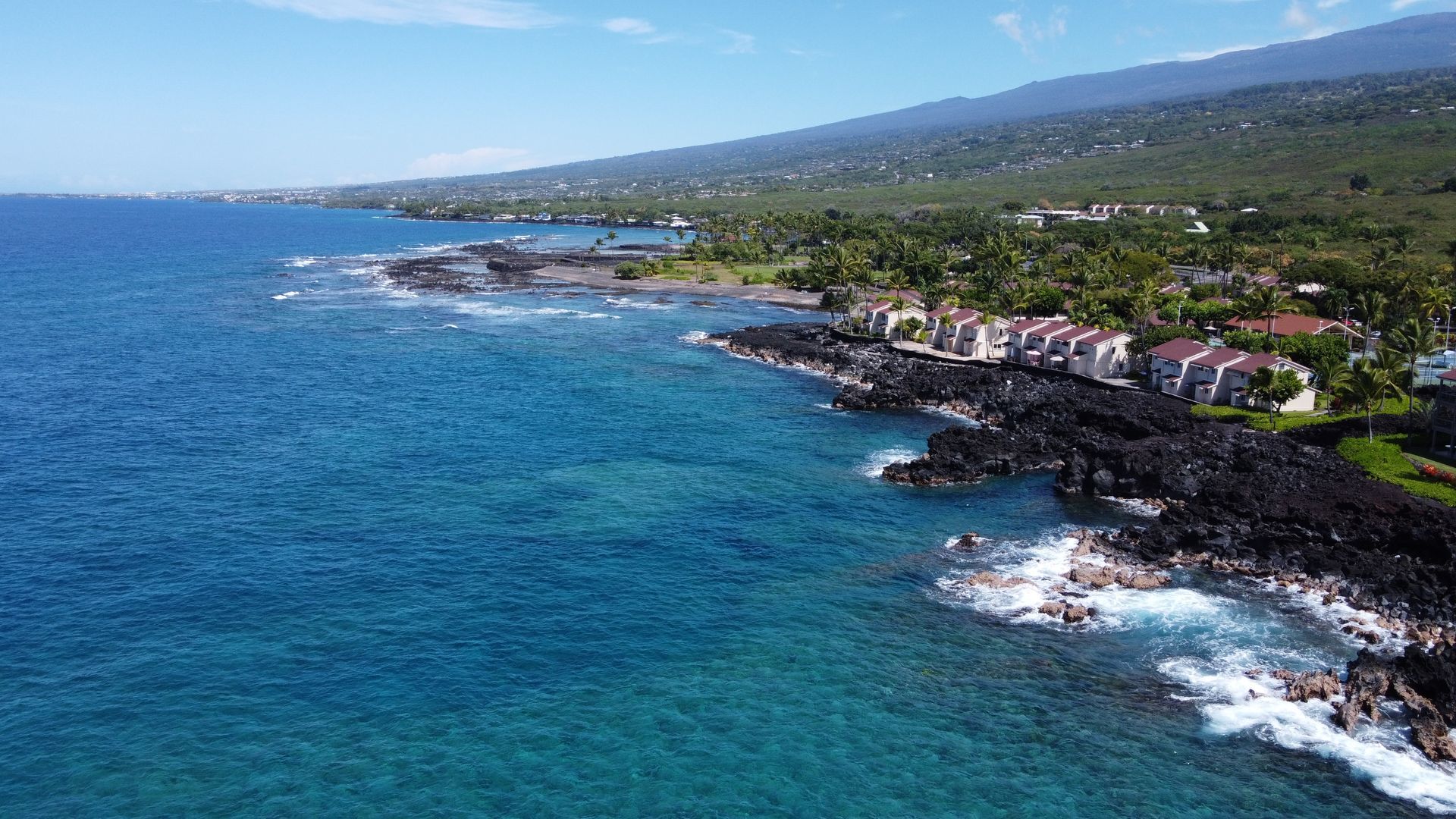
As a loose rule of thumb, condos closer to the Kailua side of Alii Drive often feel more in-town, convenient, and compact. You may be closer to restaurants, beaches, shopping, and the activity of Kailua-Kona. For some buyers, that is exactly what they want.
As you head farther south toward the Keauhou end of Alii Drive, many complexes tend to have more of a resort-style feel. You may find more greenery, larger grounds, multiple pools, tennis or pickleball courts, volleyball, and a quieter setting.
That is not an absolute rule, but it is a helpful way to think about the difference. Some buyers want walkability and convenience. Others want space, amenities, and a more relaxed feel. Both can be right, depending on the buyer.
Oceanfront Is Beautiful, But Salt Air Is Undefeated
Everybody loves the idea of oceanfront. I get it. The view, the sound, the sunsets, the whales in season, it is hard to beat.
But oceanfront ownership comes with a reality check: salt air is tough on everything.
If you buy new appliances near the ocean, I half-jokingly tell people to consider the extended warranty. The salt spray and moisture in the air can be hard on appliances, fixtures, lanai railings, windows, doors, plumbing components, and anything metal.
Before real estate, I worked with Jaguar and Ferrari in Honolulu. Many of those owners lived oceanfront, and you could see what the salt air did to their vehicles. Beautiful homes, beautiful cars, and the ocean still won a few battles.
That does not mean you should avoid oceanfront. It just means you should understand what you are buying. Oceanfront can be incredible, but it is not maintenance-free. Budget accordingly and pay attention to the condition of the building, not just the view from the lanai.
Read the Condo Documents Carefully
Once you are in escrow, the condo documents matter.
Buyers should carefully review the minutes, budgets, reserve study, house rules, pet rules, rental rules, insurance information, and any pending or recent assessments. These documents tell you how the association is being run and what issues may be coming down the road.
In the current insurance climate, I would pay very close attention to anything related to insurance. Look at premium history, deductibles, coverage changes, and whether the association has been discussing future increases or assessments.
We have seen some small dips in insurance premiums in certain situations, but overall, insurance is still one of the biggest issues affecting condo ownership in Hawaii. Buyers need to understand that before removing contingencies.
Use a Local Lender and a Local REALTOR
If there is one thing I would tell buyers before they fall in love with a Kailua-Kona condo online, it is this: understand your financing options early, and use a local lender.
Hawaii has different nuances that many mainland lenders are not familiar with. Condo hotels, lava zones, tsunami zones, sea level rise, insurance issues, association documents, and project-specific financing concerns can all affect the transaction.
A lender who does not regularly work in Hawaii may not know what questions to ask until late in the process. That can create delays, frustration, or worse, a deal that falls apart after the buyer has already spent time and money.
A local REALTOR should know more than what is written in the MLS. Which buildings had the most damage during the big earthquake? Which oceanfront condos were most affected by the Japan tsunami? Which complexes have had ongoing maintenance issues, insurance concerns, or major repairs over the years? That kind of history matters, and it is not always sitting in the listing photos.
That is why local knowledge matters. You do not just need someone to open the door. You need someone who knows the buildings, the coastline, the financing issues, and the history behind the complex.
Final Thoughts
Buying a condo in Kailua-Kona can be a great decision, but it needs to be the right condo for your goals.
Before you focus only on the view or the purchase price, make sure you understand how you plan to use the property, whether it can be financed the way you need, whether short-term rental use is allowed, what the maintenance fee actually includes, and what the long-term ownership costs may look like.
I visited all the Hawaiian Islands multiple times before choosing to make the Big Island home. Every island has something special, but there is no place in Hawaii quite like Hawaii Island.
If you are thinking about buying a condo in Kailua-Kona, I would be happy to help you sort through the options, understand the differences between complexes, and find the right fit for how you actually plan to use it. The right condo can be a great fit. The wrong one can become expensive fast.